
From Anglophilia to “Public Enemy Number One”: Why Britain Has Fascinated—and Frustrated—the World
What do Jane Austen, Sherlock Holmes, afternoon tea, the British monarchy and the Kremlin's favourite “Anglo-Saxons” have in common?
They are all connected, in very different ways, to the remarkable global fascination with Britain.
For some people, Britain represents literature, eccentricity, tradition and understated humour. For others, it represents imperialism, colonialism and geopolitical power. In Russia, this contradiction has taken an especially dramatic form: Britain has at various times been admired as a model of modernity and condemned as a dangerous enemy.
This tension between Anglophilia and Anglophobia provides a fascinating way to understand not only British cultural influence, but also how countries construct their ideas of national identity.
What exactly is Anglophilia?
Anglophilia means a strong admiration for England, English culture or things associated with England. An Anglophile is someone who is not English but has a particular fondness for English or British culture. (Merriam-Webster)
The phenomenon can take many forms. Someone might be fascinated by British literature, enjoy a British accent, follow the Royal Family, watch Doctor Who or Downton Abbey, listen to British musicians, or simply dream of living in a small English village.
But Anglophilia is more than collecting British cultural stereotypes.
Historian Elisa Tamarkin argues that American Anglophilia, for example, played a significant role in the development of American cultural and intellectual identity. Her research shows that admiration for Britain was not limited to an elite minority. It could express ideas about education, social status, tradition, manners and even what it meant to be modern. (english.berkeley.edu)
In other words, loving another country's culture can sometimes tell us something about ourselves.
Russia's complicated relationship with Britain
The history of Russian attitudes towards Britain illustrates this perfectly.
The NEST Centre's 2025 study War with the Anglo-Saxons: How Britain Became Russia's Enemy Number One describes a long-standing tension between fascination with Britain and hostility towards it. The relationship has never been simply one of friendship or enmity. (New Eurasian Strategies Centre)
In the sixteenth and seventeenth centuries, relations were largely pragmatic. English merchants traded with Russia, while English and Scottish specialists served at the Russian court and in the Russian military.
The relationship changed significantly under Peter the Great. During his visit to England in 1697, Peter studied shipbuilding and navigation and became impressed by Britain's navy and scientific achievements. England consequently became a model that he wanted Russia to emulate in several areas. (New Eurasian Strategies Centre)
This admiration spread among sections of the Russian aristocracy.
During the eighteenth century, Anglomania—an intense fascination with British culture—became fashionable among Russian elites. Members of the nobility read English authors, created English-style gardens and encouraged their children to learn English. English clubs appeared in Russian cities, while British taste became associated with sophistication and modernity. (New Eurasian Strategies Centre)
This is a particularly interesting example of cultural borrowing: a society can adopt elements of another culture because it associates them with progress, sophistication or prestige.
But admiration can coexist with rivalry
The fascinating part is that cultural admiration did not eliminate geopolitical competition.
Russia and Britain increasingly competed for influence, particularly during the eighteenth and nineteenth centuries. Britain could therefore simultaneously be viewed as a source of desirable ideas and as a strategic rival.
This is not unusual in international relations. Countries frequently emulate their rivals while simultaneously competing with them. A state might admire another country's universities but dislike its foreign policy. It might import its technology while criticising its political system. Its citizens might listen to its music while its politicians describe it as a threat.
This contradiction is one of the central ideas behind the history of Russian Anglophilia.
From admiration to Anglophobia
According to the NEST Centre, Britain eventually acquired a particularly powerful role in Russian political discourse as a symbol of the hostile West. Expressions such as “perfidious Albion” portrayed Britain as deceitful, manipulative and permanently hostile to Russian interests. (New Eurasian Strategies Centre)
The important point is that this hostility was not simply about Britain itself. Britain could function as a convenient symbol of an entire civilisation.
The NEST study argues that British identity became associated with Western liberalism and political institutions. As Russian politics became more authoritarian, Britain could therefore be presented not merely as a foreign country but as a civilisational Other—a contrasting model against which Russian identity could be defined. (New Eurasian Strategies Centre)
This is where the story becomes particularly relevant to the modern world.
Who are the “Anglo-Saxons”?
If you follow Russian political discourse today, you may frequently encounter the expression “Anglo-Saxons.”
Historically, the Anglo-Saxons were Germanic peoples who settled in Britain during the early medieval period. In contemporary Russian state and pro-Kremlin discourse, however, the term has acquired a much broader political meaning.
It is often used to refer particularly to Britain and the United States, and sometimes more broadly to Western powers. EUvsDisinfo has described the term as a recurring element of pro-Kremlin narratives, where it can function as a derogatory shorthand for supposedly aggressive or morally corrupt Western actors. (StopFake)
This is an important distinction for English learners. When you see Anglo-Saxon in a history textbook, it may refer to the early medieval peoples of England. When you see “Anglo-Saxons” in contemporary Russian political rhetoric, it may refer to a completely different concept: an imagined geopolitical bloc centred on the English-speaking West.
The same word can therefore carry very different connotations depending on the context.
The strange persistence of Anglophilia
Perhaps the most surprising aspect of the NEST Centre's research is that Anglophilia never completely disappeared, even during periods of intense political hostility.
During the Soviet era, British culture continued to attract attention. Russians read Shakespeare, Dickens, Walter Scott and Agatha Christie. Sherlock Holmes became hugely popular, while British music, including the Beatles, fascinated younger generations. (New Eurasian Strategies Centre)
Yet openly praising the British political system or British society could be politically sensitive. This created a fascinating distinction between cultural Anglophilia and political Anglophilia. You could admire Shakespeare without admiring British democracy. You could love the Beatles without wanting to live in London. You could enjoy Sherlock Holmes while believing that Britain was a geopolitical adversary. Culture, in other words, could cross borders even when politics could not.
Why are people attracted to foreign cultures?
Anglophilia also raises a broader question: Why do people become fascinated by another country in the first place?
Part of the answer is cultural prestige.
Britain has had an enormous global influence through literature, education, science, politics, music, fashion and the media. English itself has become an international language, making British cultural products unusually accessible to people around the world.
There is also an element of romanticisation.
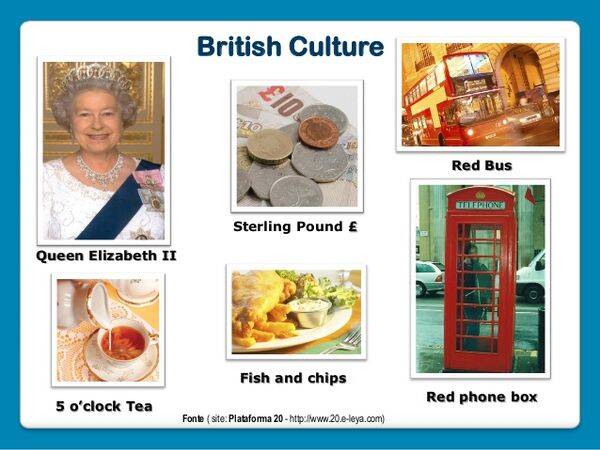
An Anglophile may not be fascinated by everyday Britain as it actually exists. Instead, they may fall in love with an imagined Britain: rainy streets, old libraries, red telephone boxes, country houses, black cabs, cosy pubs, afternoon tea and witty understatement.
This is sometimes called cultural idealisation—the tendency to perceive another culture through an attractive, selective lens.
The same phenomenon can occur with France, Italy, Japan, the United States or any country that has developed a strong international cultural image.
Anglophilia is not the same as admiration for everything British
Being an Anglophile does not necessarily mean believing Britain is perfect.
In fact, genuine interest in another culture can involve both admiration and criticism. You can admire Shakespeare while acknowledging Britain's colonial history. You can appreciate the British political tradition while questioning aspects of the monarchy. You can enjoy British humour while recognising that British society has its own inequalities and contradictions.
This distinction matters because cultural appreciation and political endorsement are not identical. Anglophilia becomes more interesting when we stop treating it as simple fandom and start seeing it as a form of cultural interaction.
The paradox of Britain: loved and hated at the same time
The Russian example reveals a broader paradox.
Britain can be perceived simultaneously as:
-
a cultural model,
-
a political rival,
-
a symbol of liberalism,
-
a former imperial power,
-
a source of literature and entertainment,
-
and an imagined enemy.
That is perhaps the real lesson of Anglophilia. Our relationship with another culture is rarely straightforward. We borrow from cultures we criticise, admire countries we compete with, and sometimes romanticise places we barely know.
Britain's global influence is therefore not simply a story of political power. It is also a story of soft power—the ability of a country to influence others through culture, ideas, language and institutions rather than military force. And perhaps that is why Britain can be both the subject of an enthusiastic afternoon-tea fantasy and the villain of a geopolitical conspiracy theory. The distance between Anglophilia and Anglophobia may be much smaller than it first appears.
Questions for thought:
- Have you ever romanticised another country or culture?
- Can cultural admiration survive political hostility?
- Is the term “Anglo-Saxons” accurate when used to describe Britain and the United States today?
- Which country has the strongest cultural influence on your generation?
- Why do we see 'criticise' and not 'criticize' in this text, or why is 'centre' not 'center'?
Think about it, and leave a comment!
Add comment
Comments